

- This event has passed.
Single-cell and spatial methods to dissect complex diseases
August 17 @ 1:00 pm – 2:00 pm
Judith and David Coffey Seminar
Speaker: Dr Boxiang Liu, National University of Singapore
This is a hybrid event. In-person at the Mackenzie Seminar Room, Level 6, Charles Perkins Centre
Online via Zoom: https://uni-sydney.zoom.us/j/85114748391
Genome-wide association studies have identified more than a million risk variants for complex diseases, yet fewer than 5% of complex disease loci have validated target genes. Closing this gap requires resolving genetic regulation at the right cell types, ancestries, and cellular contexts. In this talk, I will present three complementary efforts from my lab. First, AIDA — a single-cell atlas of ~1 million PBMCs from ~500 donors of diverse Asian descent profiled with 5′ chemistry — captures 4.3-fold more splice junctions than prior 3′ libraries and reveals ancestry-biased splicing events, including an Asian-specific TCHP variant that modulates Graves’ disease risk. Second, we developed ISSAC to map cell-state-dependent sQTLs across millions of cells and uncovers Alzheimer’s-biased sQTLs in dorsolateral prefrontal cortex snRNA-seq. Third, we developed DIRAC to use adversarial domain-invariant representations to harmonize spatial multi-omic datasets, enabling a high-resolution T cell development atlas in the mouse thymus. Together, these methods chart a path from population-scale genetics to cell-state- and tissue-resolved mechanisms underlying complex diseases.
Subscribe to our seminar mailing list
Find out more about the Statistical Bioinformatics seminar series
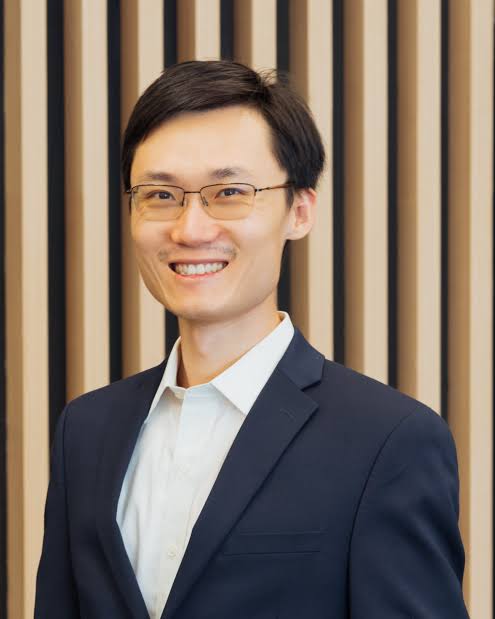
Dr Boxiang Liu
As a PI and the director of the Genomic Data Science Lab in the National University of Singapore (www.boxiangliulab.com), Dr Boxiang Liu advances the understanding of complex human diseases through innovative genetic, single-cell, and spatial transcriptomic analyses. He has published >90 publications, including Nature, Cell, Nature Genetics, and Nature Methods, focusing on genomic and transcriptomic methodologies to dissect the genetic architecture of polygenic diseases. A significant facet of his academic endeavour includes a pivotal role in the Genotype-Tissue Expression (GTEx) Project, contributing to a comprehensive understanding of genetic effects on molecular phenotype across diverse tissues. Additionally, he spearheaded the single-cell splicing analysis within the Asian Immune Diversity Atlas project, which collected >500 donors of diverse Asian ancestries. His group’s work provided the first cell-type-specific sQTL map using over 1 million PBMC single cells. He has been awarded the Presidential Young Professorship (Singapore), National Academy of Science Young Scientist Award (Singapore), National Research Foundation Fellow (Singapore), President’s Award in Natural Sciences and Mathematics (US), Charles B. Carrington Memorial Award (US), and the National Award for Outstanding Overseas PhD Students (China).
Connect with Boxiang:
X: @boxiangliu
Bluesky: @boxiangliu.bsky.social