

- This event has passed.
A foundation model for clinician-centered drug repurposing
March 9 @ 1:00 pm – 2:00 pm
Statistical Bioinformatics Seminar
Speaker: Kexin Huang (Co-founder and CEO of Phylo)
This is an online event held via Zoom: https://uni-sydney.zoom.us/j/85114748391

Drug repurposing—identifying new therapeutic uses for approved drugs—is often a serendipitous and opportunistic endeavour to expand the use of drugs for new diseases. The clinical utility of drug-repurposing artificial intelligence (AI) models remains limited because these models focus narrowly on diseases for which some drugs already exist. Here we introduce TxGNN, a graph foundation model for zero-shot drug repurposing, identifying therapeutic candidates even for diseases with limited treatment options or no existing drugs. Trained on a medical knowledge graph, TxGNN uses a graph neural network and metric learning module to rank drugs as potential indications and contraindications for 17,080 diseases. When benchmarked against 8 methods, TxGNN improves prediction accuracy for indications by 49.2% and contraindications by 35.1% under stringent zero-shot evaluation. To facilitate model interpretation, TxGNN’s Explainer module offers transparent insights into multi-hop medical knowledge paths that form TxGNN’s predictive rationales. Human evaluation of TxGNN’s Explainer showed that TxGNN’s predictions and explanations perform encouragingly on multiple axes of performance beyond accuracy. Many of TxGNN’s new predictions align well with off-label prescriptions that clinicians previously made in a large healthcare system. TxGNN’s drug-repurposing predictions are accurate, consistent with off-label drug use, and can be investigated by human experts through multi-hop interpretable rationales.
Subscribe to our seminar mailing list
Find out more about the Statistical Bioinformatics seminar series
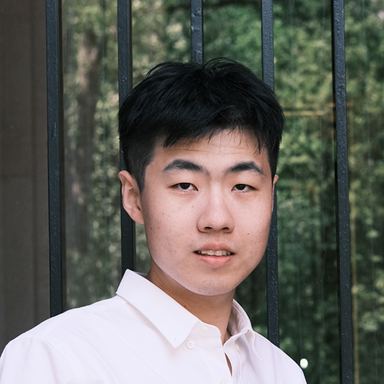
Kexin Huang
Kexin Huang is the Co-founder and CEO of Phylo, a research lab studying agentic biology. Before Phylo, Kexin was a PhD student in Computer Science at Stanford University, advised by Prof. Jure Leskovec. His research focuses on leveraging AI to drive novel, deployable, and interpretable biomedical discoveries, while also tackling fundamental AI challenges such as multi-modal modelling, uncertainty quantification, and agentic reasoning. His work has been published in Nature Medicine, Nature Biotechnology, Nature Chemical Biology, Nature Biomedical Engineering, Nature, and machine learning conferences including NeurIPS, ICML, and ICLR. He has received 6 best paper awards at NeurIPS/ICML workshops, ISMB, and ASHG, with cover article in Nature Biotechnology and Cell Patterns. His research has been featured in major media outlets such as Forbes, WIRED, and MIT Technology Review. He has also contributed to machine learning research at leading companies and institutions, including Genentech, GSK, Pfizer, IQVIA, Flatiron Health, Dana-Farber Cancer Institute, and Rockefeller University.